Place Based Working
-
Organisational Antibodies Reject Place-Based and Decentralised Approaches
Placed based work will actually serve people’s needs more completely and more cheaply. The consciousness of place is not hierarchical or expert. It relies on the intrinsic value of each member of the place. Any flattening is frightening to the… Continue reading

-
Why Decentralised Place-Based Approaches Can Fail
Genuine place based decentralised approaches are not merely structural changes; they are assaults on the fundamental logic of the traditional organisation which is designed to minimise variance and maximise control. Continue reading

-
Why We Must Pivot to Community Enabling
How do you build resilience into systems? “We need to be system shapers and system stewards – seeking ways to create the system we want, not be passive victims of it” The pivot we need to make is from viewing… Continue reading

-
How To (Re)Build An Innovation Lab
Bromford Lab is dead. But what comes next? And how can we build upon the lessons we learned? Continue reading

-
The Way Out of The ‘Performance Myth’
The Performance Myth reduces individuals to commodities or “performers,” whose value is contingent on meeting predefined metrics. This leads to a workplace culture where employees are constantly evaluated not for their creativity, integrity, or contributions to collective well-being, but for… Continue reading

-
Sectors Reimagined as Products, and the Move to Agile Place
What if agile places could save the public sector? What if we stopped thinking of individual sectors and started thinking about of them as ‘products’ that require interoperability? An ‘agile place’ view demands a radical shift. It pushes us to… Continue reading

-
Transforming Public Services with Agile Principles
Applied outside of tech agile can usher in a fundamental shift from rigid, top-down planning to a dynamic, iterative, and, crucially, person-focused approach. Think about our place-based working experiments. What we understood, fundamentally, is that the answers to local problems… Continue reading

-
The Missing Ingredient For Community-Led Innovation Is Permission
The bigger the unit the more pessimistic we get about it. When faced with vast issues like global warming or national debt, we feel a deep lack of control and efficacy. Conversely, smaller units of change, like a local community,… Continue reading

-
The Small Challenge For Big Companies
Small = Optimised for Innovation Research suggests that smaller teams are more optimised for innovation. Indeed, as Dashun Wang and James A. Evans write for HBR, large teams can be better at development and deployment, but small teams are better at disruption. Their analysis… Continue reading

-
The Myth of Centralisation
The enemy of innovation is the management desire to centralise everything. Centralisation is often touted as being more efficient but it’s nothing of the sort. In truth it is a simply a corporate power grab, an attempt to control, to… Continue reading

-
Do We Need A Department of Effectiveness?
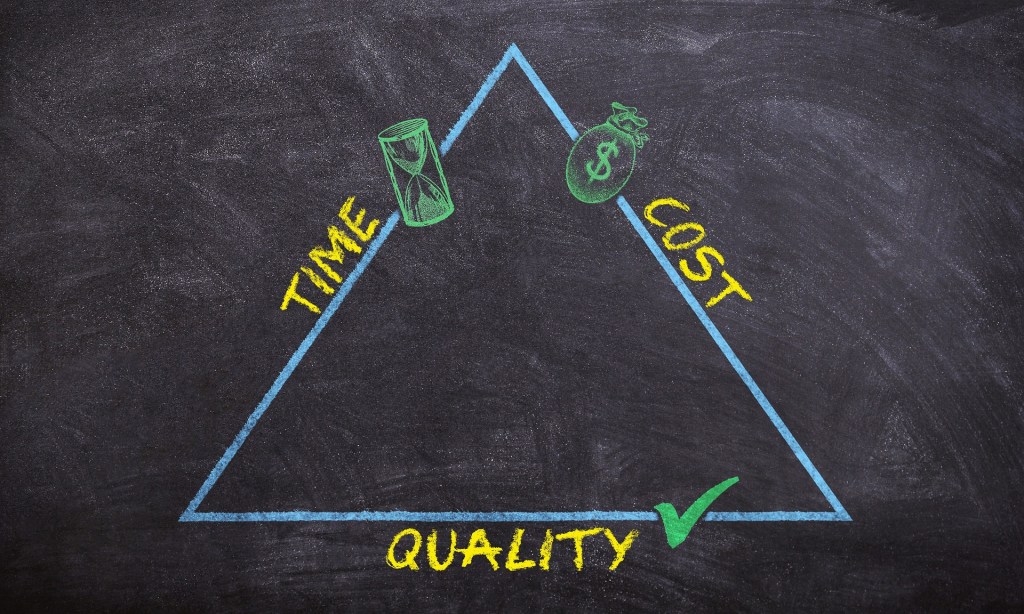
As things get really tight, it will feel like the safe thing to do is stick with what you know. Double down on the same processes, hire the same people and hope technology will save us. The problem of course… Continue reading
-
What Gets Measured Gets Gamed
Campbell’s Law builds on earlier ideas, notably Goodhart’s Law, which states: “When a measure becomes a target, it ceases to be a good measure.” Campbell extended this concept to social indicators, emphasising the systemic distortions that can arise when metrics… Continue reading

-
The Desperate Need To Reorganise Our Resources
Brooks’ Law is a principle in software development that states: “Adding manpower to a late project makes it later.” It was coined by Fred Brooks in his 1975 book “The Mythical Man-Month” As more people join, the number of communication… Continue reading

-
Place Based Working Upends Business As Usual
There’s a major shift in the Bromford Strategy that upends our legacy business model: our move to place-based working by 2027. But how do you shift to a completely new model within the constraints of a 60 year-old organisation? Continue reading

 Paul Taylor