
With a “Four a Day” picture diary the idea is to keep things simple and focused by capturing just four photos that define the day, each answering a specific prompt:
Where is it happening?
What are we doing?
Who is involved?
and Why?
First of all, I’m giving up on the ‘four a day idea’. I’ve tried it but it’s not happening. I’m the travel planner in this relationship, so it’s stressful enough trying to work out where we need to be next, never mind writing about it. As we hit the more relaxed end of the trip I’ll post when I can.
Where is it happening?
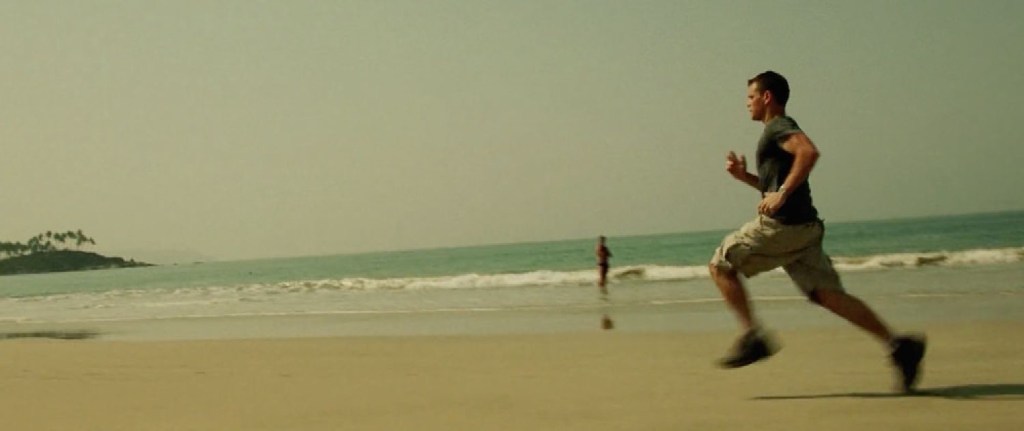
Palolem, Goa.
And no, this isn’t a photo of me but of a young Matt Damon.
Palolem gained international cool status in 2004 thanks to Hollywood. In the opening scenes of The Bourne Supremacy, Matt Damon’s character, Jason Bourne, is shown living a low-profile life in a simple beach shack. There’s the run along a palm fringed beach, and a car chase through Goa.
While the “Bourne shack” is long gone, the movie helped transform Palolem from a hidden backpacker secret into a bucket-list destination for travellers seeking that rugged escape.
Palolem is much more commercialised now, but you can still find some solitude, mainly because of the number of people who come here to meditate or learn yoga.
It made me wonder which places has Hollywood truly ruined? I’d go for Maya Bay in Thailand after it was featured in The Beach. Other suggestions welcome.
What are we doing?
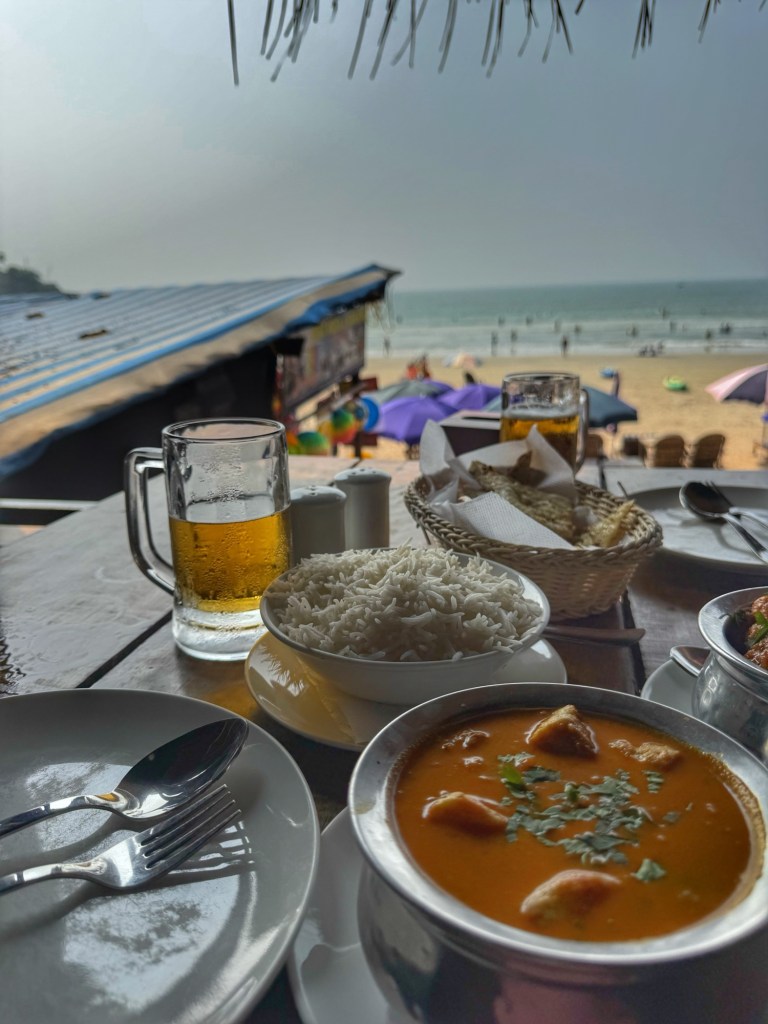
Eating Goan fish curry rice on the beach.
I think it was Rick Stein who said the quintessential Goan experience was sitting at a beach shack with fish curry rice and ice cold Kingfisher beer.
If he didn’t say it, I’m saying it. It’s literally the first thing I do after arrival
Fish Curry Rice (Xit Kodi) isn’t just a meal; it’s a reflection of Goa’s complex history.
The dish is a marriage of local Konkani coastal flavors and 450 years of Portuguese influence. While locals always had the coconut and fresh catch, the Portuguese introduced red chillies from the Americas.
It was historically a fisherman’s fuel—simple, spicy, and nourishing.
Who is involved?
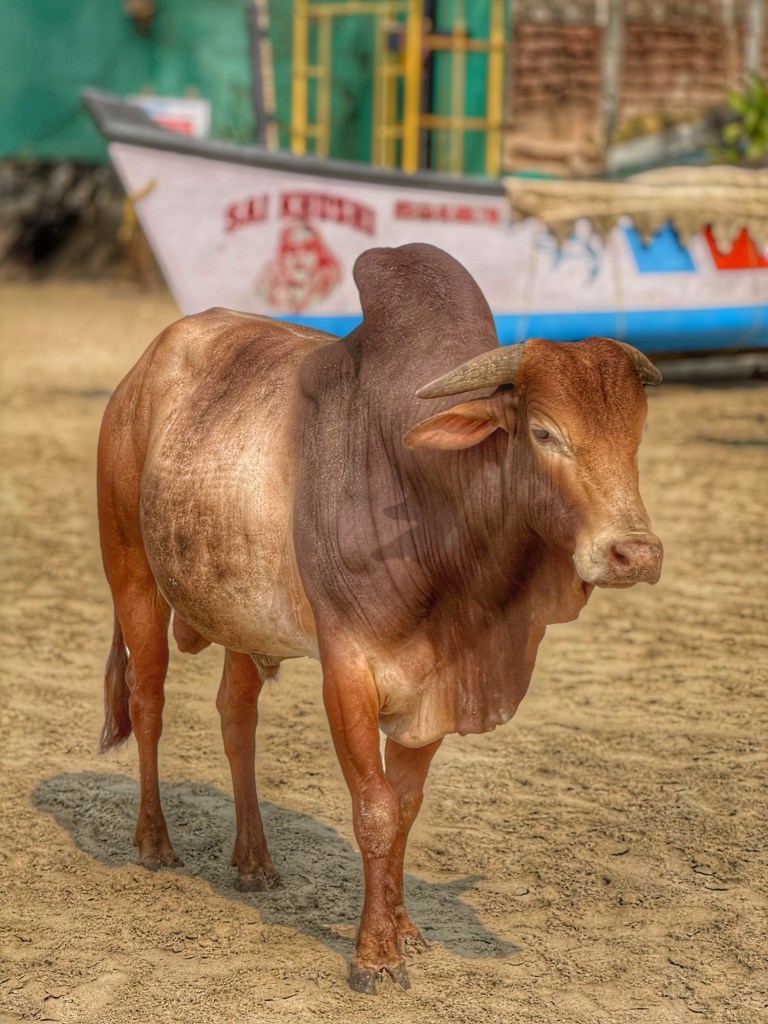
A cow, on the beach. One of many.
You can spot a westerner in India purely by how bemused they are by cows. The locals are clearly bemused by us taking photos of them. This is normal right?
In Hinduism, the cow is revered as Gau Mata (Mother Cow), a symbol of non-violence, life, and the earth’s bounty. Because they are considered sacred and associated with deities like Lord Krishna, they are rarely fenced in.
In India, cows traditionally have a “right to roam” that is both cultural and spiritual. They are seen as communal members of the village rather than mere property. Seeing them on the sand isn’t “straying”—it’s simply their version of a day at the beach.
You might even catch one licking your arm, they are often attracted to the salt on human skin or the minerals in the sea-sprayed sand.
Why?

I understand the cultural requirement to wash your feet, but I can’t imagine sticking mine in a Goan public toilet.
Never mind that, I’m staggered that this owner has to remind patrons not to wash their balls in the loo. It’s like asking folk not to drink from it.
Four more tomorrow (maybe) . If you want even more follow me on instagram
Namaste!

 Paul Taylor
Leave a comment