Organisational Design
-
Do You Really Know What Is Going On In Your Organisation?
We are at an inflection point: When it comes to workplace culture, there is a large gap between what leaders think is going on and what employees say is happening on the ground. The Hidden Value Of Culture Makers According… Continue reading

-
The Way We Work Isn’t Working
The office, after management, is arguably the biggest inefficiency tax that organisations layer over themselves. They cost huge amounts to procure and maintain, they become an all too convenient base for meetings (another inefficiency tax), and they set a precedent… Continue reading

-
How Technology Can Increase Collaboration And Build Trust
This post is an shortened version of a plenary talk delivered in Cardiff for the Wales Audit Office Depending on your age it’s likely that the two things you were not taught in school were: a) how to collaborate effectively… Continue reading

-
Why Do We Hate Our Offices?
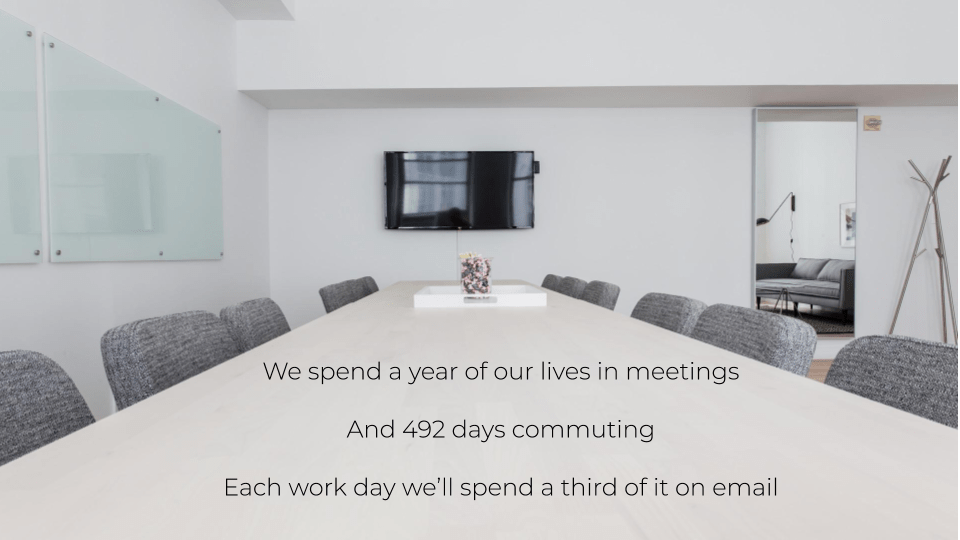
If you are working in an office today you will be interrupted – or you will interrupt yourself – every 3 minutes. And what’s worse is it will take most of us up to 23 minutes to recover from that distraction. If… Continue reading
-
Why We Are So Bad At Defining Problems
If I had an hour to solve a problem I’d spend 55 minutes thinking about the problem and five minutes thinking about solutions. – Albert Einstein I don’t know whether Einstein ever used those words. It may be just like… Continue reading

-
What We Can Learn From The Oldest Companies in The World
Shigemitsu Kongo, a Japanese Buddhist temple builder, formed his construction company Kongo Gumi in in 578 AD. His company built relationships with their customers that lasted for 1,400 years, surviving through many wars and natural disasters, just like their temples. It… Continue reading

-
How Good Company Culture Can Go Bad
Here’s a sentence I never thought I’d write. One of the best hours I spent this week was with our Governance, Risk and Assurance Team. There – I said it. Joking aside, the relationship between governance and innovation is an… Continue reading
-
Creating The Right Culture For Innovation and Change
I’m not sure I buy into the concept of organisations having a culture of innovation. After all, innovation is a process consisting of four things: Having an idea that solves a problem Doing something with that idea Proving that it… Continue reading
 Paul Taylor