
The heresy of one age becomes the orthodoxy of the next – Helen Keller
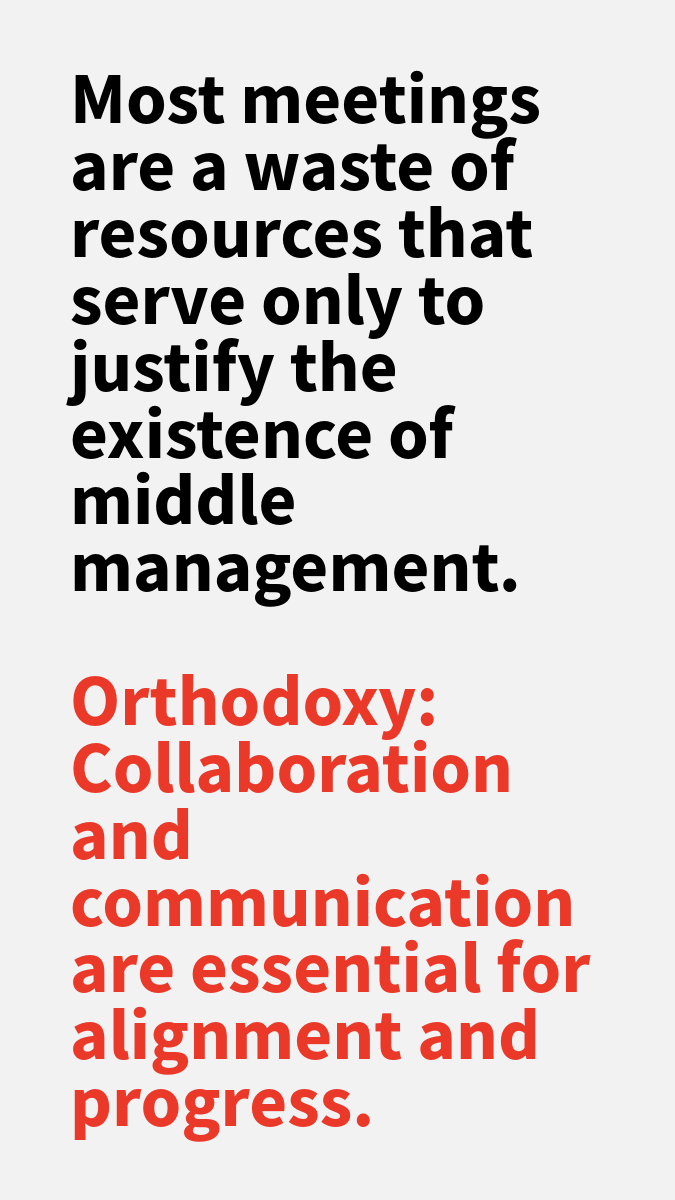

In today’s corporate environment, the instinct of the system is to demand order, predictability, and consensus. Yet, the reality facing us is that nearly half of CEOs don’t think their organisations will survive 10 years unless they radically change path.
The solution to this lies not in reinforcing prevailing orthodoxy , but in institutionalising ‘heretical thinking’. Giving a mandate for constructive dissent must be moved immediately from a discouraged anomaly to a mainstream strategic imperative.
How We Kill Heresy
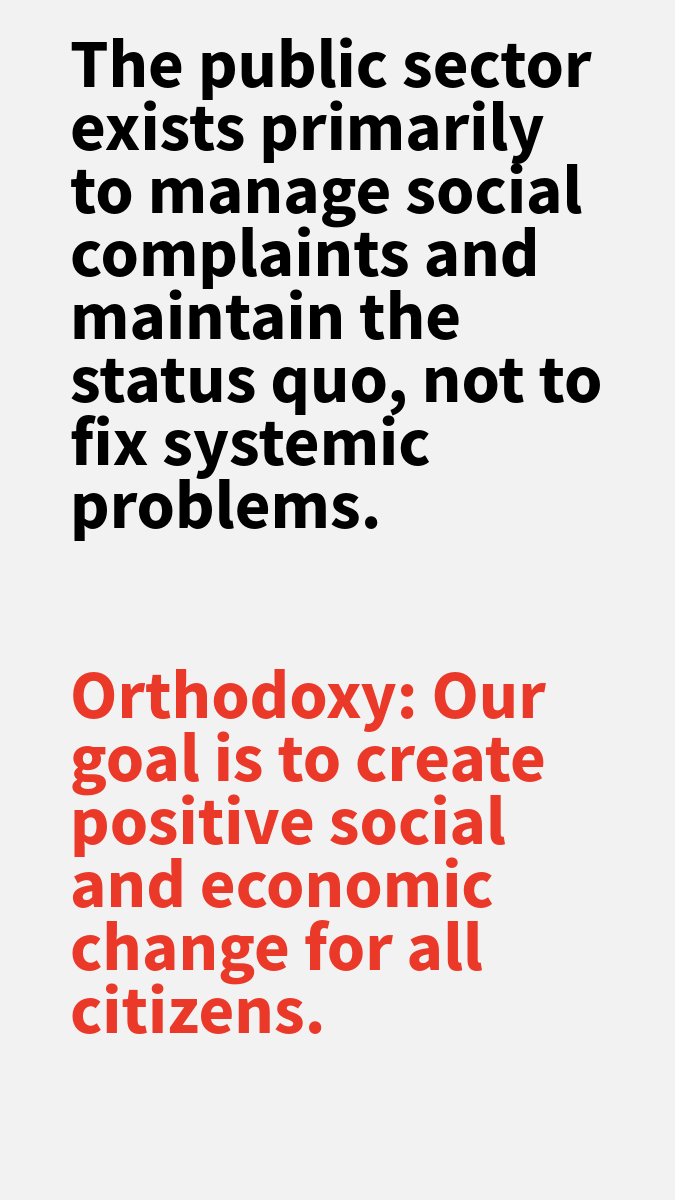
Heretical thinking, which I’m defining as a challenge to organisational sacred cows—those fundamental assumptions, practices, or long-established revenue streams—is suppressed in traditional organisations. This suppression is not accidental; it is built into the system’s design.
Understanding how the system protects itself from challenge is vital if you want to create change. The system protects the current business model not though active suppression, but through the creation of inertia.
Cultural Inertia: The widespread fear of speaking up or challenging power structures.
Cognitive Inertia: The presence of unchallenged assumptions and deep-seated groupthink.
And possibly the most powerful and commonplace,
Action Inertia: The sunk cost fallacy that prevents the organisation from shifting resources quickly or stopping legacy processes or rituals. These aren’t inherently bad , but as Amro Alkado writes “when they drift out of context, they stop serving people and start serving the system itself.”
They become → 𝐑𝐢𝐭𝐮𝐚𝐥𝐢𝐬𝐭𝐢𝐜 𝐑𝐞𝐚𝐬𝐬𝐮𝐫𝐚𝐧𝐜𝐞.
Performances of safety that soothe anxiety rather than solve problems.
This is a crucial point, as what is often referred to as ‘culture’ , the ‘way we do things around here’, is often the system flexing its muscle and subtly enforcing the status quo to prevent or limit any change.


The Strategic Mandate: Mainstreaming Dissent
We must make a deliberate choice to institutionalise constructive dissent, recognising it as a form of commitment aimed at organisational learning. As Peter Drucker observed, the first rule of decision-making is that one does not make a decision unless there is disagreement. The value of productive tension—the clashing of ideas that results in a stronger resolution—must be embraced.
It almost goes without saying that the introduction of heretical thinking requires a bedrock of psychological safety. Without it, employees perceive that disagreement will result in negative consequences, guaranteeing silence.
Five Ways To Introduce Heretical Ideas and New Rituals:
1 – Fear of reprisal kills good ideas. You are not collecting feedback; you are inviting treason against the status quo.
- The Mandate: Implement a third-party, no-metadata submission tool. No IP logs, no email traces, no names. It must be impossible to confirm who the heretic is.
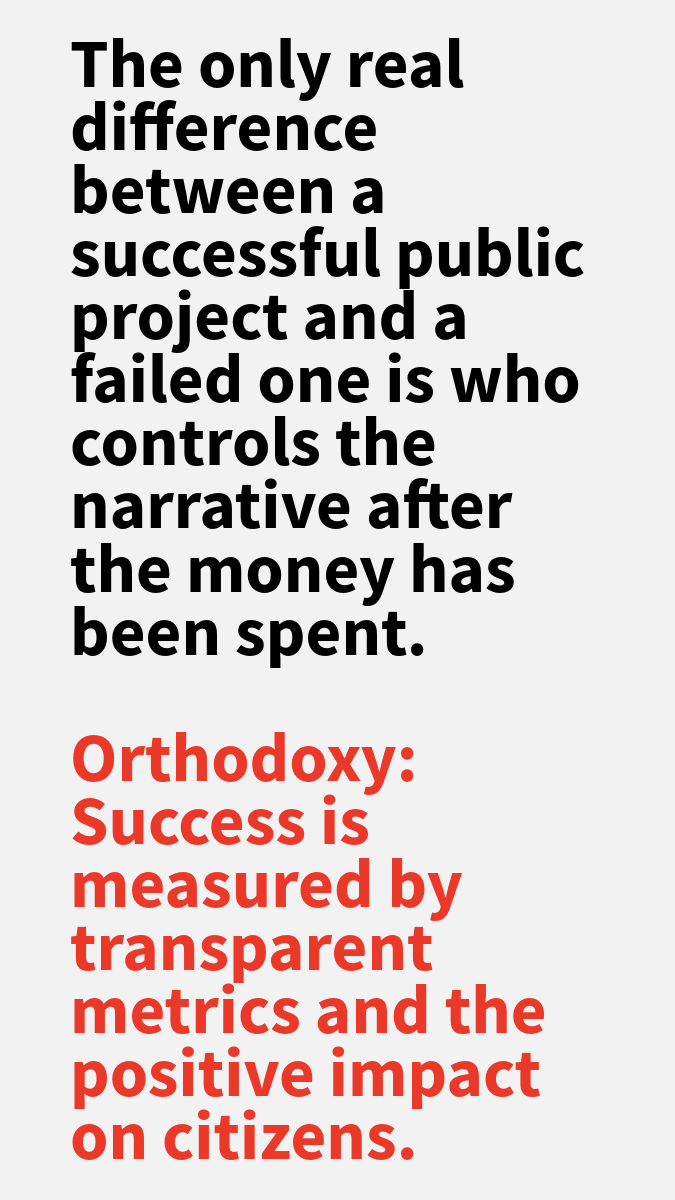
- The Ritual: The submitted heresy must explicitly challenge a core organisational belief (e.g. “The Budget Allocation Model,” “The Team Away Day” “The Culture of Mandatory Meetings”). Only foundational critiques qualify.
2 – Never force the person who spotted the flaw to be the one who fights the war. The idea needs a handler.
- The Mandate: Once the heretical idea is chosen, assign a politically secure senior leader—someone with tenure and clout—to serve as the Devil’s Advocate Champion. Their job is to manage the backlash and vet the concept.
- The Ritual: Host a mandatory “Status Quo Trial“ where the champion presents the heresy and forces any challenger to articulate the benefits of adopting the change, rather than just defending the existing process.
3 – A reward system tied to implementation will only generate safe ideas. You need to reward the courage to challenge power.
- The Mandate: Reward challenging power as a recognition of critical thinking. Award a prize for the ‘idea that could get you fired’ but has generated the most valuable strategic debate, regardless of implementation.
- The Ritual: The top heretic receives a week of paid time off or a dedicated budget for an unrelated passion project. The message: We value your independent thought, now apply it elsewhere.
4 – Ideas that disappear into a black hole breed cynicism. You must show the heretics you’re listening, even when the answer is “No.”
- The Mandate: Every selected heresy must receive a formal, public response. This response must be substantive: it must clearly detail the specific constraints (legal, fiscal, technical) preventing the change. No vague dismissals.
- The Ritual: Maintain a public, internal “Book of Heresies.” This open log contains every submission and the subsequent, detailed response. This builds organisational memory and shows that critique is taken seriously.
5 – Heresy must be constructive. It is a critique of the system, not a vehicle for settling personal scores.
- The Mandate: Submissions must explicitly target processes, policies, or systemic assumptions. Any critique targeting an individual’s performance or competence is immediately discarded.
- The Ritual: Run an annual “Process Obituary Contest.” Employees submit a dead-weight process and write its mock obituary, detailing its failure and celebrating its demise.


So , I’m being a little bit playful with these suggestions, as an organisation that solicits heresy without committing to action is merely performing (another) ritual that breeds deeper cynicism. To truly leverage unorthodox challenges, the organisation must adopt a framework based on safety, consequence, and investment.
The main point of this post being:
Discord and friction are necessary.
Effective organisations need just enough friction and regular, intense debates, because discord has to be allowed to take its proper place to solve the problems that matter. The system dislikes discord.
We must challenge the common corporate value of seeking consensus and harmony at all costs.


 Paul Taylor
Leave a reply to WhatsthePONT Cancel reply