During March and April I spent a month travelling through Vietnam. It’s a country that has made extraordinary strides in poverty reduction over the past few decades, transforming from one of the world’s poorest countries to a lower-middle-income nation.
There’s definitely a sense of forward momentum, of a young population on a quest for something better. Infrastructure is booming. It’s a trivial example but I didn’t see a pothole on the roads in a month. Two minutes driving outside Birmingham Airport on my return, I nearly blew a tyre out.
Whether “the West” is in civilisational decline is hotly debated. Arguments for decline point to relative economic shifts as other nations rise, high debt, deep political polarisation, and eroding social cohesion.
However, counter arguments highlight our strengths: strong economies, technological innovation, high living standards, and historical adaptability. People still want to come and live here.
It does seem though, that many of our institutions are in decline.
The average lifespan of a civilisation is 336 years.
Big companies used to have a lifespan of 61 years, today that’s down to 18.
If all civilisations fall then so must all companies and institutions.
Joseph Tainter, in The Collapse of Complex Societies suggests civilisations unravel when the sheer cost of maintaining their complexity outweighs the benefits.
He argues that societies don’t become complex for no reason. Increased complexity is typically a response to problems or a way to achieve desirable outcomes.
The crucial part of Tainter’s argument is the diminishing returns on maintaining the complexity. Each additional investment in complexity yields a smaller marginal benefit than previous investments. For example, doubling the size of the bureaucracy might no longer double its effectiveness, but it will certainly double (or more) its cost.
Additionally the costs of maintaining the existing level of complexity continue to rise (due to resource depletion, population pressure, wear and tear).
Eventually, a society can reach a point where the marginal cost of adding one more unit of complexity (or even just maintaining the current level) is higher than the marginal benefit gained from it.
We spend more and more energy, resources, and human effort just to keep things running, with less and less to show for it in terms of real improvements or problem-solving.
Tainter’s insights into societal collapse find a parallel in the corporate world and public sector.
A company initially builds a structure to solve problems and grow, but there comes a tipping point where these once-helpful structures become a dead weight, signalling a slow decay. The visible signs of this dangerous over-complexity are often insidious, creeping into the daily life of an organisation.
The most common manifestation is a bloated bureaucracy, where too many layers of management create a long and winding road for any decision.
Ideas and approvals crawl up and down the hierarchy, and the organisation becomes plagued by endless meetings and committees, often with unclear objectives, breeding a culture where action is secondary to discussion.
This administrative creep often goes hand-in-hand with overly complicated approval processes, where simple initiatives require a an array of signatures and justifications.
Beyond the managerial structures, the very systems and processes that once supported operations can become sources of friction. Workflows grow convoluted over time, patched with exceptions and workarounds until they are barely comprehensible, let alone efficient.
Companies find themselves wrestling with redundant internal IT systems that refuse to communicate, leading to data silos where information is duplicated, inconsistent, or simply lost.
This internal entanglement inevitably impacts communication and the flow of information. Important messages can become distorted or lost as they navigate the complex organisational chart, and despite a potential deluge of data from numerous reports, employees often struggle to find the clear, concise information vital for their roles.
Indeed, the sheer volume of reporting can itself become a symptom, with significant effort poured into generating documents that offer little actionable insight.
These are all interconnected symptoms of organisational decline. The question is – is it too late to reverse it?
I’m an optimist , but we must all look out for and address signs of decay on a daily basis.
Just last week I listened to a colleague say they sometimes felt that ticking a box and hitting a target was valued more than spending an hour having a coffee with a customer who needed some support.
Don’t just stand and watch the decline. It’s time for action
Rediscover your core purpose.
Axe those soul-crushing stupid rules and complex processes and over-reporting; ask your people what truly needs fixing.
Genuinely listen, then empower small, agile teams to solve problems, fast.
Put your customer or end user back at the absolute heart of every decision.
The fightback against decline could start today.
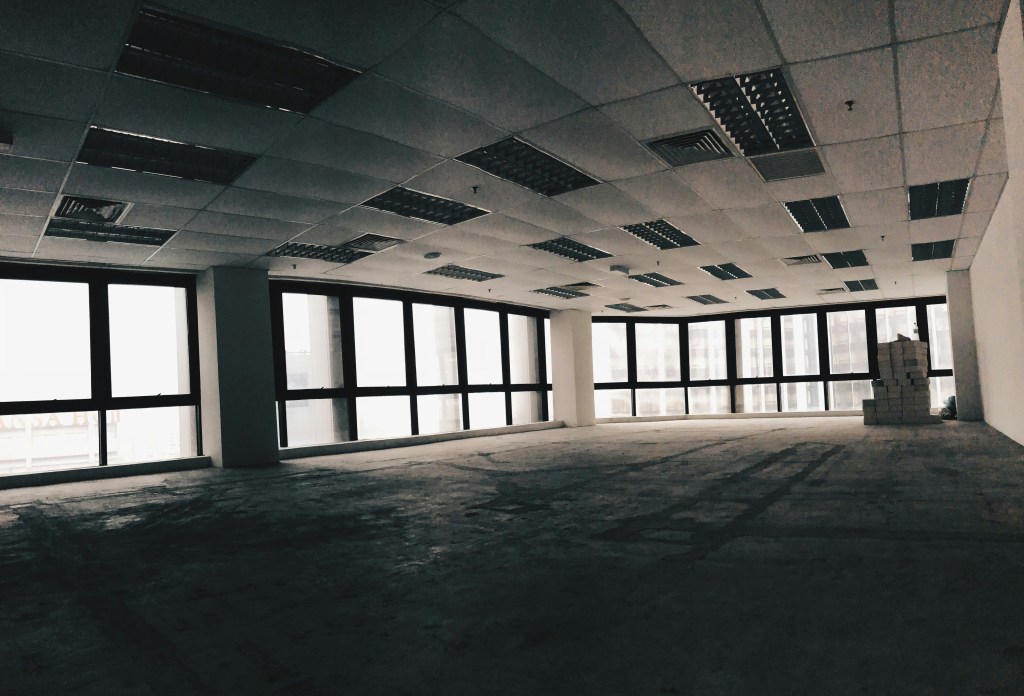
Photo by Razlan Hanafiah on Unsplash


 Paul Taylor
Leave a reply to Andrew Humphreys Cancel reply