bromford
-
Reshaping Organisations Around What’s Strong – Not What’s Wrong
“ECONOMICS ARE THE METHOD: THE OBJECT IS TO CHANGE THE SOUL” This (pretty chilling) quote comes from Margaret Thatcher in 1981 – and ushered in an era that promoted the belief that social progress is achieved through the accumulation of wealth… Continue reading

-
Avoiding The Yo-Yo Effect of ‘Corporate Change Convulsions’
Speeches you never hear at a corporate conference: “….. Our Transformation Programme is going to be small and imperfect. We are going to do many small things that probably won’t work straight away.’ – Chris Bolton In the early 1960s, a New… Continue reading

-
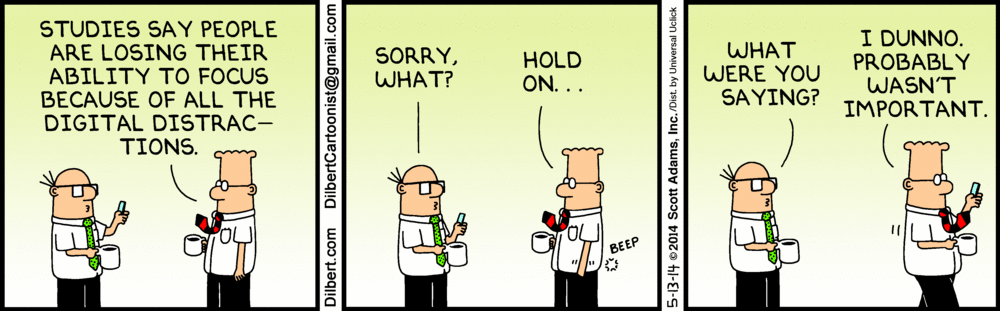
Continuous Partial Attention: Designing A Less Distracted Future Of Work
Calm, focused, undistracted, the linear mind is being pushed aside by a new kind of mind that wants and needs to take in and dole out information in short, disjointed, often overlapping bursts—the faster, the better – Nicholas Carr ,… Continue reading
-
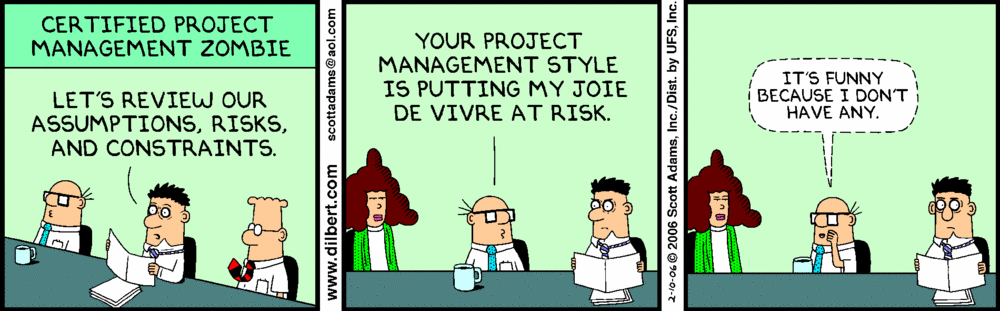
Why We Need To Learn To Love Project Managers
‘There isn’t a child alive who dreams of being a project manager’ – so said Scott Berkun. He pointed out that project managers can unintentionally reinforce their work as (let’s be honest) dull – by trying to get everyone to pay… Continue reading
-
How The 9-5 Saps Our Creativity and Harms Our Productivity
From ten to eleven, have breakfast for seven; From eleven to noon, think you’ve come too soon; From twelve to one, think what’s to be done; From one to two, find nothing to do; From two to three, think it… Continue reading

-
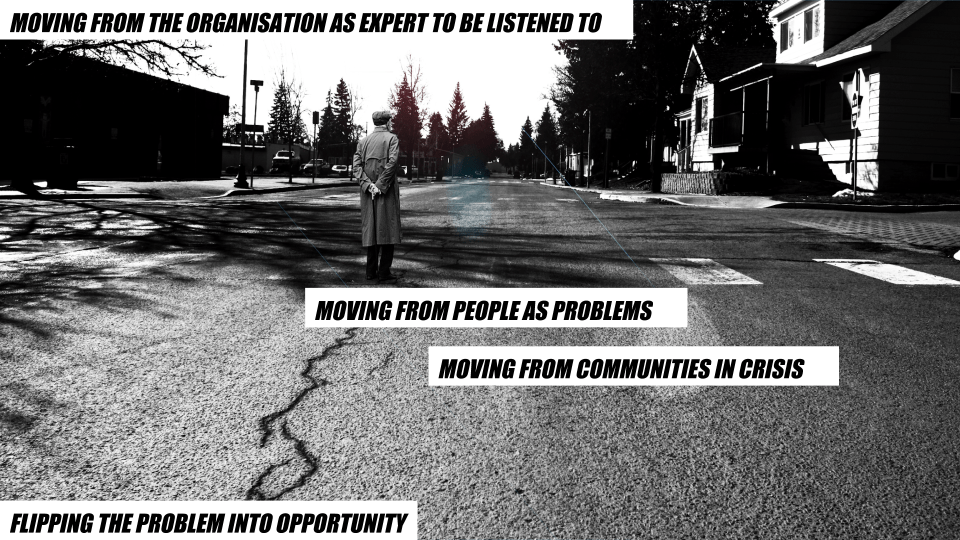
How To Design For Better Outcomes
Our job is to the mind the gap between the bureaucracy of our systems and the opportunities in our communities – Cormac Russell Sometimes it’s preferable to pull the plug on a service before you see it collapse in front of… Continue reading
-
Why Do We Still Need Managers?
“Management is not only dysfunctional, Management is also destructive” – Companies Without Managers Last week we held the first of the Bromford #inspiremelab sessions – where colleagues curated and then discussed provocations around the future of how we work. We covered… Continue reading

-
Redefining Trust In A Digital Age
Trust is not coming back. Scepticism reigns, as it should. – Gerry McGovern Since the industrial revolution, a trusting relationship between individuals and organisations has been the norm. This has shaped the way we communicate – both internally and externally.… Continue reading

-
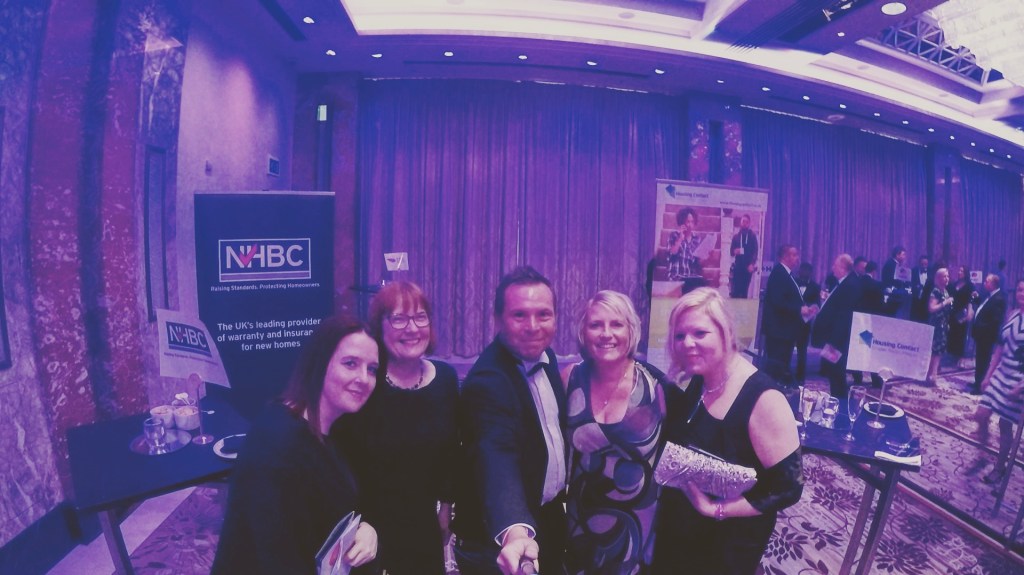
Do Industry Awards Inspire or Inhibit Innovation?
This week Bromford was announced the winner of the ‘Outstanding innovation of the year’ recognising our approach to testing and developing new services. Philippa Jones, our chief executive, said: “This is fantastic recognition for so many colleagues and customers who have… Continue reading
-
How To Become A Disobedient Organisation
Imagine being given $250,000 for deliberately breaking the rules. No strings attached. That’s exactly what MIT are doing. Recognising that societies and institutions lean toward order and away from chaos they have launched an award and cash prize that will go… Continue reading

-
How Not To Involve Customers
In 1985 one of the biggest brands in the world nearly destroyed itself – by listening to what customers said. Coca-Cola developed a product dubbed “New Coke” that was slightly sweeter than the original. Almost 200,000 blind taste tests were… Continue reading

-
Know Your Customers, Just Never Ask Them What They Want
We do not really know what our potential users will really respond to, what they will understand or what they’ll hate until we really see them using it –Jonathan Courtney If you are working on any new service change or… Continue reading

-
How Automation Helps Us Solve The Problems That Matter
“One machine can do the work of fifty ordinary men. No machine can do the work of one extraordinary man.” – Elbert Hubbard Automation gets a bad rap. The original draft of our design principles stated “Automate everything that can be automated”. People… Continue reading
-
Why We Solve The Wrong Problems
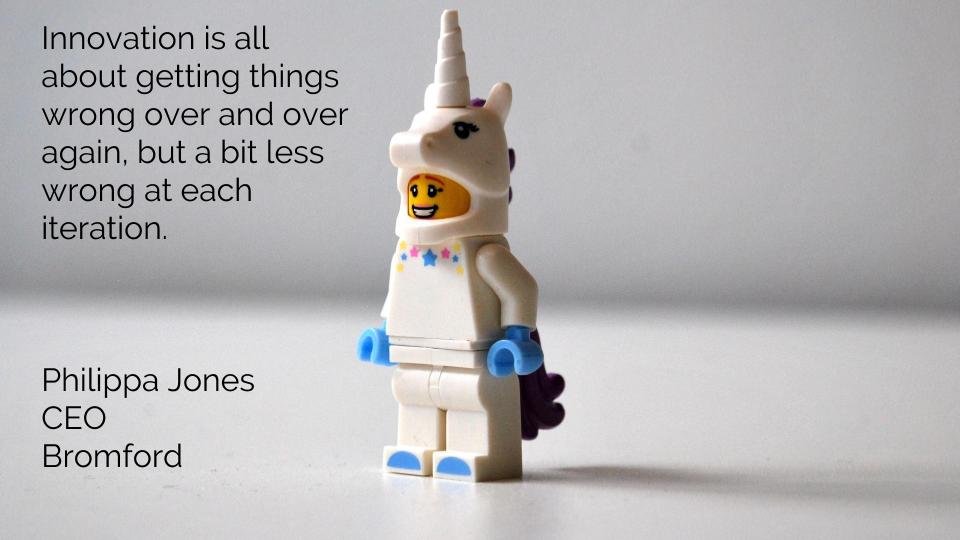
Everywhere I look I see organisations and people investing heavily in new initiatives, transformation, and change programmes. And in almost every case the goals will never be met. One of the most crucial causes of the failure? The right questions were… Continue reading
-
Why We Love Silo Working And What To Do About It
In 1988 Phil. S. Ensor coined the term the functional silo system. His contention was that narrow, specialised teams and jobs were easy to manage but imposed a very damaging learning disability on the organisation. We become focused on addressing organisational… Continue reading

-
Embracing Challenge to Build a Stronger Innovation Culture
Just as your body is designed to fight a common cold, most of our cultures protect the organisational DNA from any antibodies. Add something new and it can get rejected. As Chris Bolton has written organisations can have immune systems and… Continue reading

-
Why Collaboration Does Not Equal Innovation
Transformation can’t happen without discovery and discovery can’t happen without experimentation. It’s a new year and at Bromford we are planning a reboot of our approach to innovation (actually we are planning a reboot of everything). My emerging thoughts are… Continue reading
-
Most Services Launched This Year Will Fail – Here’s Why
According to Clayton Christensen , 30,000 new consumer products are launched every year—and 95% of them fail. There’s no equivalent figure available for the public or social sectors – but I’ve been wondering how many services have been launched in… Continue reading

-
How To Fast Track Innovation
If you speak at conferences about innovation you’ll almost always encounter some frustrated people. They approach you at the end, or contact you a few days later. They often have one thing in common. They, and others like them ,… Continue reading

-
Using Weak Signals To Determine Your Future Organisation
“Weak signals consist of emergent changes to technology, culture, markets, the economy, consumer tastes and behaviour, and demographics. Weak signals are hard to evaluate because they are incomplete, unsettled and unclear” – Vijay Govindarajan. Luckily for us the future doesn’t… Continue reading
 Paul Taylor